
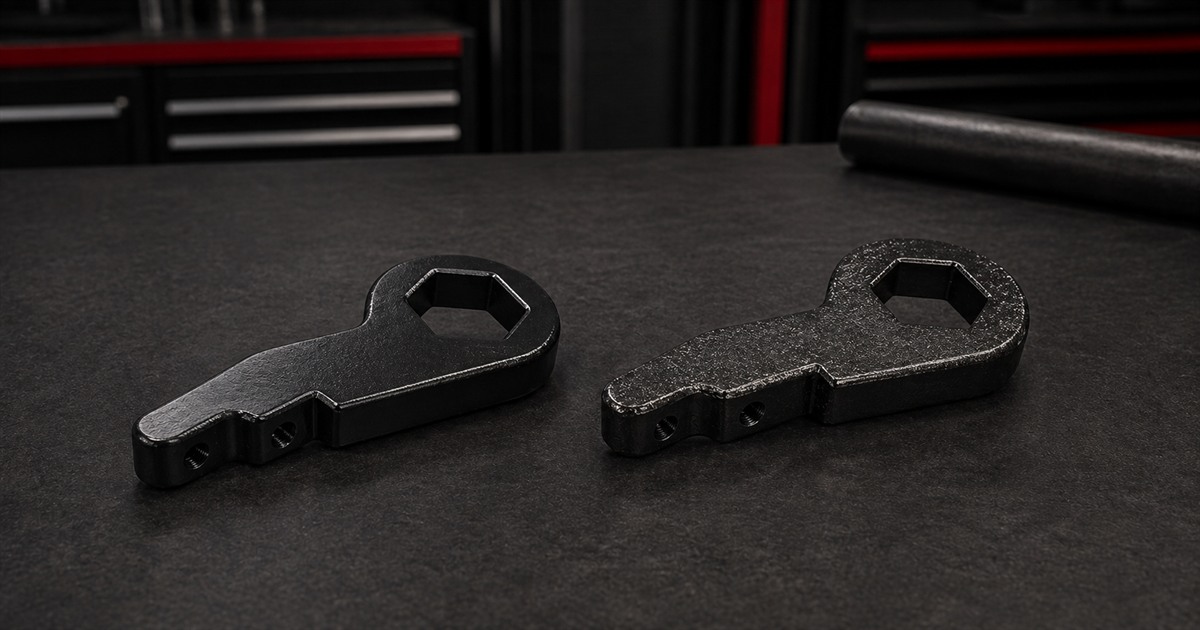
Forged vs Cast Torsion Keys: What Truck Owners Should Know
Posted by Trekline Motorsports on May 6th 2026
By the Trekline Motorsports Suspension Experts · Updated April 2026 · ~2,500 words, 12–14 min read
If you're looking to level or lift your truck, torsion keys are one of the most popular and cost-effective modifications out there. But when you start shopping, you'll quickly encounter two options: forged and cast torsion keys. Both work, both are available from quality manufacturers, but they're fundamentally different in how they're made and how they perform. Understanding those differences helps you choose the right part for your truck and your budget.
At Trekline Motorsports, we've been assembling suspension kits for over 20 years, and we've seen every type of torsion key application imaginable. We've helped truck owners in Dunlap, Tennessee, and across the country get the perfect fit for their vehicles. In this guide, we'll break down the manufacturing differences, explain the real-world performance gap, and help you make an informed decision.
What Do Torsion Keys Actually Do?
Before comparing forged and cast torsion keys, it helps to understand the torsion-bar system. A torsion bar is a spring. Instead of compressing like a coil spring, it twists to support the front of the truck and absorb bumps.
The torsion key is the lever/indexing part that connects the torsion bar to the adjuster. Changing the key changes the available adjustment range and the resting position of the bar. That is how a torsion-key leveling kit can raise or lower the front ride height on trucks that use torsion bars.
A torsion key does not change the spring rate of the torsion bar, and it does not add suspension travel. If the front is adjusted higher, the truck usually gains ride height by increasing torsion-bar preload and changing where the suspension sits in its travel. That can reduce available droop travel if pushed too far.
Torsion Keys vs. Other Front-End Lifting Methods
If this is your first time shopping leveling parts, it's worth stepping back to see where torsion keys fit in the bigger picture. Torsion keys are the simplest, cheapest way to level a torsion-bar truck. Spacer-style leveling kits do a similar job on coil-sprung trucks. Full lift kits combine spacers or keys with new shocks, brackets, and sometimes UCAs for 2-4 inches of height. Our lift kit vs. leveling kit breakdown lays all of that out side-by-side so you can decide whether torsion keys are the right tool at all, or whether you need a broader kit.
Worth noting too: most torsion-key shopping is for leveling or light lifting, but torsion-bar trucks can also use application-specific lowering keys. If lowering is your goal, do not use the wrong key or force the adjusters outside the intended range. Use lowering keys or other lowering parts designed for the truck. Our complete truck lowering guide covers the other side of that equation.
Which Trucks Use Torsion Bar Suspension?
Torsion bar suspension was the standard for truck manufacturers for decades, though it's become less common in recent years as independent suspension designs have improved. If you're working with an older or mid-generation truck, there's a good chance you have torsion bars.
General Motors has been the biggest user of torsion bar systems. The Chevrolet Silverado 1500 (4WD) and GMC Sierra 1500 (4WD) are the most common applications, particularly the 1988 through 2006 model years. GM's full-size SUVs - the Tahoe, Suburban, and Yukon - also use torsion bars in 4WD (92-99) and 2WD/4WD (00-06) configurations. These remain popular platforms for enthusiasts because they're reliable, affordable to modify, and the torsion bar system is forgiving for leveling and light lifting.
Ford used torsion bars in their 4WD F-150 trucks from 1997 through 2003 and in the Ranger 4WD lineup during a similar window. The Expedition also uses this system. Dodge incorporated torsion bar front suspension in 4WD versions of the Dakota and Durango for many model years, making them another popular choice for aftermarket suspension work.
You'll notice a pattern: torsion bars live almost exclusively on 4WD trucks, since 2WD versions of the same platforms typically use coils or drop spindles (except for in the case of 00-06 Chevy/GMC SUVs, 00-10 Chevy/GMC 2500HD, 3500HD, and some very rare 2WD Silverado 1500s with torsion Keys). If you're not sure which side of that line your truck falls on (or why it matters for kit selection), our 2WD vs. 4WD lift kit comparison walks through the differences. If your truck falls outside these torsion-bar applications, it likely uses a different suspension design and torsion keys won't apply to your vehicle.
How Leveling With Torsion Keys Works
The leveling process is straightforward in theory, but the torsion bar is under load and must be handled with the correct unloading tool. With the truck safely supported, the torsion bar load is relieved, the factory key is removed, and the aftermarket key is installed.
An aftermarket torsion key uses a different indexing angle than the stock key. That gives more adjustment range so the front of the truck can be brought up within the recommended range for the application. The amount of height depends on the truck, the key design, the condition of the torsion bars, and the final adjuster setting.
The benefit over simply maxing out worn factory keys is controlled adjustment range. A quality key helps reach a level stance without running the stock adjuster at the end of its range. The final setup still needs proper ride-height measurement, shock travel check, CV/ball joint angle inspection on 4WD trucks, and a front-end alignment.
Torsion keys are popular because they are affordable and work well for mild leveling. They are not a substitute for a full suspension lift when the goal is a tall lift or major tire clearance.
Cast Torsion Keys: Material Properties and Performance
Cast torsion keys are made by pouring molten metal into a mold, then machining the finished part. Casting can produce useful automotive parts, and a properly designed casting can work in many applications.
The concern is consistency and fatigue resistance under repeated suspension load. Torsion keys see heavy clamping and twisting forces. Poor castings, low-grade material, voids, or weak design can create a safety problem. That is why material quality and manufacturing process matter.
For a light-duty street truck, a well-made cast key may very well perform acceptably if it is properly engineered. However, Trekline generally favors forged torsion keys for leveling and lowering applications because forged parts offer a stronger and more consistent structure for this type of loaded suspension component.
Forged Torsion Keys: The Heavy-Duty Advantage
Forged torsion keys are made by forming heated metal under high pressure. This process compresses and aligns the metal structure, which generally improves strength and fatigue resistance compared with a similar cast part.
That extra strength matters because torsion keys carry repeated suspension loads. A forged key provides a stronger safety margin for trucks that see towing, larger tires, rough roads, off-road use, or regular load changes.
Forged keys are still not a free pass to over-crank the front suspension. Ride height needs to stay within the recommended range, and the truck still needs proper shock length, alignment, and front-end inspection after installation.
The Real-World Performance Difference
Let's talk about what actually changes when you upgrade from cast to forged torsion keys. The material itself does not set the ride height. Ride height comes from the key's indexing, the adjuster position, the torsion bar condition, and the final setup. If two keys have the same indexing and are adjusted to the same height, the truck should sit similarly. The forged-versus-cast difference is mainly about strength, consistency, and fatigue resistance in a loaded suspension part.
Where forged keys shine is durability and long-term margin under repeated load. That matters on trucks that tow, haul, run larger tires, see rough roads, or spend time off pavement. A well-designed cast key possibly might work in some light-duty applications, but casting quality varies and voids, weak material, or poor design are bigger concerns on a part that carries suspension load.
For a mild street-truck level, the driver may not feel a ride-quality difference from key material alone. That does not make material unimportant. The key is still a safety-critical suspension component, and Trekline favors forged keys because the cost difference is small compared with the labor involved and the value of a stronger, more consistent part. Shocks, tires, alignment, and final ride height still have a major effect on handling and ride quality.
The "Cranking Torsion Bars" Myth
There are two opposite myths about torsion bars. One says any torsion-key adjustment instantly destroys the suspension. The other says re-indexed keys add height with no extra stress or ride-quality change. The truth is in the middle.
A torsion key changes the indexed position of the torsion bar adjuster. When the front of the truck is raised, the bar is typically preloaded more at ride height and the suspension sits closer to the top of its travel. That can make the ride firmer and reduce droop travel.
A mild adjustment within the recommended range is common and can be reliable. Over-cranking the system to chase maximum height is where problems start. At that point, the truck may ride harshly, top out shocks, limit suspension travel, and increase wear on ball joints, CV axles, shocks, and steering parts.
Just Cranking Stock Keys: Why Aftermarket Upgrades Matter
Some owners try to level a torsion-bar truck by turning the stock adjuster bolts as far as possible. That may gain some height, but it often leaves the adjuster near the end of its range and can create poor ride quality or limited droop travel. Additionally in some situations it could cause the adjustment bolt to actually break!
Aftermarket torsion keys are designed with a different indexing angle so the desired ride height can be reached with better adjuster position. The goal is not to force the truck as high as possible. The goal is to reach a reasonable level stance while keeping the suspension usable.
If you are serious about leveling a torsion-bar truck, use keys designed for the application, inspect the front end first, use the proper unloading tool, and align the truck afterward.
Ride Quality Considerations
Torsion-key adjustment can affect ride quality because raising the front changes preload and where the suspension sits in its travel. A mild level may feel close to stock. A maxed-out adjustment can feel noticeably firmer and may make the suspension top out over bumps.
The key material does not fix a harsh ride. Forged keys are about strength and consistency, not softness. If the truck rides poorly after installation, the usual causes are too much adjustment, worn shocks, incorrect shock length, worn front-end parts, or alignment issues.
For the best result, keep the height reasonable, use shocks matched to the ride height, check droop travel, and get a professional alignment.
When Forged Torsion Keys Actually Matter
Forged torsion keys matter most when strength, consistency, and long-term durability are priorities. They are especially worthwhile for 4WD trucks, trucks with larger tires, trucks that tow or haul, and trucks driven on rough roads.
Even on a mild street truck, forged keys are a smart choice because the cost difference is usually small compared with the labor involved and the safety role of the part. Trekline’s torsion key offerings are built around that approach.
Trekline Motorsports Torsion Key Options
At Trekline Motorsports, we've been assembling torsion key kits for over two decades, and we understand the needs of truck owners across the country. We stock quality torsion keys for the most popular truck models and offer them at competitive pricing with fast shipping.
For Chevrolet and GMC trucks, we carry keys for the classic K1500 generation (1988–1998) at SKU 8000900, GM SUVs including Tahoe, Suburban, and Yukon (1992–1999) at SKU 8000901, and the Silverado and Sierra 1500 (1999–2006) at SKU 8000902. For 2000–2006 GM SUVs (Tahoe, Suburban, Yukon) we offer a matching kit that bundles the torsion keys and shock extenders together at SKU 8000903.
Ford truck owners can find F-150 (1997–2003) and Expedition (1998–2002) torsion keys at SKU 8000907. Our standard torsion-key sets (SKUs 8000900, 8000901, 8000902, and 8000907) are $66 per pair. The 8000903 GM SUV kit bundles keys and shock extenders and is priced at $112. Many in-stock orders ship within one business day. We're located in Dunlap, Tennessee, and serve customers across the United States. If you have questions about which keys fit your truck or need installation advice, reach out to us at info@treklinemotorsports.com. Our team has the experience to help you get the right parts for your project.
Frequently Asked Questions
Below are answers to the most common questions we hear about torsion keys and the forged versus cast decision.
Can you level a truck with stock torsion keys?
You can sometimes gain a small amount of height by adjusting the stock keys, but the range is limited and may leave the adjuster near the end of its travel. Aftermarket torsion keys use a different indexing angle to provide a more useful adjustment range.
Will torsion keys damage my torsion bars?
Properly installed torsion keys used within the recommended range should not automatically damage the torsion bars. Problems are more likely when the truck is over-cranked, the shocks top out, alignment is skipped, or worn front-end parts are ignored.
How much does it cost to level a truck with torsion keys?
Torsion keys are one of the most affordable leveling options. The parts are usually inexpensive compared with full suspension lifts, but you should still budget for installation tools or shop labor and a front-end alignment.
Do forged torsion keys last longer than cast?
Forged keys generally offer better strength and fatigue resistance than similar cast keys. In normal use, both design and material quality matter, but Trekline favors forged keys because they provide a stronger safety margin.
Will torsion keys affect my truck's handling?
They can. A mild adjustment may feel close to stock, but more preload can make the front end firmer and reduce droop travel. Alignment is required after changing front ride height.
Can I use the same torsion keys on different trucks?
No. Torsion keys must match the truck’s year range, drivetrain, suspension design, and torsion bar setup. Do not order by appearance alone.
Should I level the front and rear of my truck equally?
A leveling kit usually raises or lowers the front to reduce factory rake. If you tow or haul, keeping some rear rake may be helpful so the truck does not squat when loaded.
Can I install torsion keys myself?
Only if you have the correct torsion bar unloading tool and suspension experience. Torsion bars are under heavy load. After installation, the truck needs an alignment and a hardware/front-end check.
Ready to Choose Torsion Keys?
Trekline Motorsports has been assembling suspension kits for over 20 years, serving truck owners across the country from our shop in Dunlap, Tennessee. Browse our selection of forged torsion keys for GM, Ford, and Dodge trucks, and we'll ship many in-stock orders within one business day.
Have questions? Email us at info@treklinemotorsports.com. Our team is ready to help you find the right torsion keys for your truck.