
Best Lift Kit for Chevy Silverado: 1500, 2500HD & 3500HD Guide
Posted by Trekline Motorsports on May 6th 2026
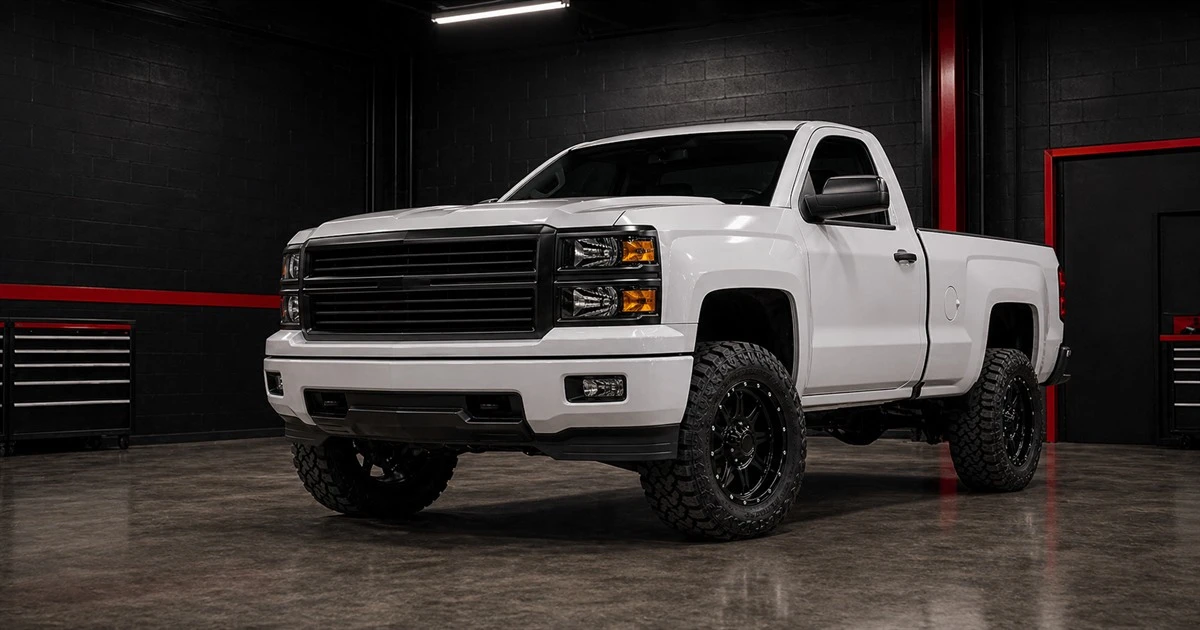
Lifting your Chevy Silverado is one of the most popular modifications in the truck world, and for good reason. Whether you're looking to clear bigger tires, improve ground clearance for trail work, or simply get that aggressive stance you've been craving, choosing the right lift kit can make all the difference between a smooth, reliable setup and a headache down the road.
Fitment note: Silverado/Sierra lift parts must be matched by year range, drivetrain, suspension type, cab/rotor details on some older trucks, and wheel/tire setup. A part that works on a 2WD truck often will not work on the 4WD version.
We've been assembling suspension kits here at Trekline Motorsports for over 20 years, and we've seen just about every Silverado generation come through our shop. This guide pulls together everything we've learned to help you make an informed decision about the best lift kit for your specific truck and needs. If you're still weighing the basic choice between a simple level and a true lift, start with our lift kit vs leveling kit comparison before diving in here.
Understanding Lift Kit Basics
Before diving into generation-specific recommendations, let's talk about what we mean when we discuss lift height. A lift kit raises your truck by using one or more suspension components. The amount of lift depends on which components you upgrade and how you configure them.
Most lift kits fall into three categories: leveling kits (1-2 inches), mid-range lifts (3-4 inches), and full suspension lifts (5-6 inches or more). The choice depends on your budget, your tire size goals, and whether you need front-only leveling or a complete suspension upgrade.
The key difference between a leveling kit and a true lift kit is important to understand. A leveling kit raises only the front of your truck to match the factory-set rear ride height. A full lift kit raises both front and rear, or focuses on achieving a specific amount of overall height gain. Cost expectations follow a similar pattern - see our breakdown of how much it costs to lift a truck for a dollar-by-dollar look at each tier.
1988-1998 C/K 1500 (OBS) Lift Options
The 1988-1998 OBS Chevy/GMC trucks are still popular because they are simple, affordable, and have strong suspension support. The main split is 2WD C1500 versus 4WD K1500.
Most 2WD C1500 trucks in this generation use an independent front suspension with coil springs and front spindles/steering knuckles. For front lift, the common choices are lift spindles or coil-spacer-style parts. Torsion keys are not used on the 2WD C1500 front suspension.
For the rear of many 2WD OBS trucks, lift shackles or lift blocks may be used depending on the stance goal and existing setup. Make sure the rear axle/leaf spring arrangement is correct before ordering blocks or shackles.
Trekline carries cab- and rotor-specific 4-inch lift spindle options for many 88-98 C1500 2WD trucks. Examples include 88-91 C1500 Standard Cab 2WD 4-inch lift spindles, 88-98 C1500 Extended Cab 2WD 4-inch lift spindles, and 92-98 C1500 Standard Cab 2WD 4-inch lift spindles. Rotor thickness matters on these trucks, so measure before ordering.
The K1500 4WD trucks of this era use a different front suspension with torsion bars and front CV axles. Trekline’s 88-98 K1500 4WD leveling torsion keys are a common option for a mild front-end level. Going taller on a 4WD K1500 requires more planning because CV angle, ball joint angle, shock length, and alignment all become more important. We cover that trade-off in more detail in our 2WD vs 4WD lift kits guide.
1999-2006 Silverado 1500: The Most Popular Generation
The 1999-2006 Silverado/Sierra 1500 is one of the most common platforms in the lift kit world. These trucks are still easy to find, and the aftermarket support is strong.
For 2WD trucks in this generation, rear lift shackles and rear blocks can help fine-tune stance. Trekline’s 99-18 Silverado/Sierra rear lift shackles, 99-06 Silverado/Sierra 1-inch rear lift blocks, and 99-06 Silverado/Sierra 2-inch rear lift blocks are common rear-height options depending on the setup. When using rear blocks, always check U-bolt length, thread engagement, and condition before reuse.
If you want a clean front lift on a 99-06 2WD Silverado/Sierra 1500, lift spindles are often the best place to start. Trekline’s 99-06 Silverado/Sierra 1500 2WD 3-inch lift spindles raise the front while keeping much of the factory suspension layout intact.
The 4WD models of this generation use a torsion-bar IFS setup with front CV axles. For a mild front level, Trekline’s 99-06 Silverado/Sierra 1500 4WD leveling torsion keys are a common option. For larger 4WD lifts, you need to account for CV axle angle, steering angle, ball joint angle, shock length, and alignment range instead of relying on torsion key adjustment alone.
Tire fitment on these trucks depends heavily on wheel width, offset/backspacing, tire width, and trimming. A mild level may clear a moderate tire, while 3-inch and taller setups require closer attention to rubbing at full turn and suspension compression.
2007-2013 Silverado 1500: The Modern-Day Classic
The GMT900 Silverado/Sierra 1500 platform continued with independent front suspension and offered more refined ride and handling than the previous generation. It is still a popular generation for both mild leveling and more aggressive lifted builds.
For 2WD trucks, a 3-inch spindle lift is a strong option when the goal is front height with good street manners. Trekline’s 07-15 Silverado/Sierra 1500 2WD 3-inch lift spindles are a common choice. For builds where front brake line routing is a concern, Trekline also offers 07-15 2WD 3-inch lift spindles with extended brake lines.
For 4WD models, this generation still requires attention to CV axle angle and front-end geometry. A mild leveling setup may be simple, but taller lifts should be planned as a system. Upper control arms can help with ball joint angle and alignment range, while CV angle correction depends more on the lift design, differential position, shock length, and vehicle-specific geometry. For more detail, see our upper control arms after lift guide.
At 3-4 inches of lift, many owners target larger tire sizes, but there is no one-size-fits-all fitment rule. Wheel offset, tire width, fender liner clearance, bumper clearance, and trimming make a major difference.
2014-2018 Silverado 1500: Higher Standards
By 2014, GM had refined the Silverado platform further. Suspension compliance improved, steering feel got sharper, and the trucks became even more capable. However, this also means that lift components are more specific to this generation, and cutting corners becomes more obvious in terms of ride quality.
For 2WD models wanting a modest lift, a 2-inch rear block and spacer setup can work when it matches the truck, but many owners prefer a complete front-and-rear approach for balanced stance and ride quality. When you go to 3-4 inches, spindles or application-specific front parts paired with rear blocks, shackles, add-a-leaf parts, or other leaf-spring hardware are the more accurate way to plan the build.
The 4WD trucks of this generation are more sophisticated. The magnetic ride control suspension (if equipped) can be problematic with aggressive lifts unless you invest in a complete system designed specifically for these trucks. This is not a generation to cheap out on. If you're lifting a 2014-2018 4WD Silverado, budget properly for a full kit that accounts for the electronic suspension components.
Tire fitment at 3-4 inches allows for 33-35 inch tires, depending on fender clearance and your wheel offset. The newer trucks have slightly different approaches to fender clearance compared to older generations.
2019-Present Silverado 1500: New Age Trucks
The 2019 and newer Silverado 1500 platform brought updated suspension geometry, frame design, and more complex electronic systems. Lifting these newer trucks requires components specifically designed for the year range, drivetrain, trim, and suspension package.
For 2019+ 2WD trucks wanting a 2-3 inch lift, use spacer systems or other front lift parts specifically designed for that generation. These newer trucks tend to respond best to conservative, application-matched lifts, and many owners find that 2-3 inches is a practical range for ride quality and appearance.
The 4WD models, particularly those with Magnetic Ride Control or other active/electronic dampers, need carefully chosen components. You cannot just bolt on suspension parts without considering how the damping system, ride-height sensors where equipped, driver-assistance systems, alignment range, and front-end geometry respond to the change. A conservative 2-inch level can be straightforward on many trucks, but the product fitment notes and trim-specific requirements still matter.
On 2019+ trucks, a 3-4 inch lift often puts 33-inch tire setups in reach, and some builds can fit larger tires with the right wheel width, offset, trimming, and kit design. Ride quality can stay good with a moderate, well-matched lift, but it is not automatic. The farther you move from the factory setup, the more important shocks, alignment, tire weight, wheel offset, and electronic-suspension compatibility become.
Lift Heights and Component Breakdown
Lift height is only one part of the decision. The parts used to get that height matter just as much as the number advertised on the kit.
1-2 Inch Leveling Lifts
At this height range, you are usually making light changes. On many 4WD GM trucks, torsion keys may be used for a mild front level. On 2WD trucks, the best option depends on the front suspension design, but small spacers, lift coils, or other application-specific parts may be used. Rear lift shackles and blocks can help fine-tune the back of the truck.
Typical parts may include torsion keys, rear shackles, rear lift blocks, U-bolts, shock extenders, or application-specific spacers. Even at mild heights, a front-end alignment is recommended when front suspension height changes.
3-4 Inch Mid-Range Lifts
This is where component choice becomes more important. On many 2WD Silverado/Sierra trucks, lift spindles are a strong choice because they raise the truck without forcing the spring or control arms into an extreme position. Spindles replace the factory spindle/steering knuckle, but they do not replace your ball joints so it is advisable to change them at the same time as you change spindles.
On 4WD trucks, a mid-range lift needs to be planned around CV axle angle, ball joint angle, steering angle, shock length, brake line routing, and alignment range. Depending on the truck, that may mean upper control arms, longer shocks, brake line brackets or extended lines, differential-drop components, or a complete vehicle-specific kit.
5-6 Inch Full Suspension Lifts
A 5-6 inch lift is usually a full suspension system, especially on 4WD IFS trucks. These builds may include lift knuckles, crossmembers, drop brackets, differential drop components, upper control arms, shocks or struts, rear blocks, U-bolts, brake line brackets, and other hardware.
At this height, every component needs to work together. Professional installation and alignment are strongly recommended because poor geometry can cause tire wear, steering issues, vibration, brake line stretch, or premature front-end wear.
2WD vs 4WD Considerations
The biggest difference between lifting a 2WD and 4WD Silverado comes down to the front drivetrain and suspension geometry.
A 2WD Silverado/Sierra 1500 does not have front CV axles or a front differential sending power to the front wheels. That makes many 2WD lift setups simpler. Lift spindles are especially popular on many 2WD trucks because they raise the front without forcing the CV-angle concerns that exist on 4WD IFS trucks.
A 4WD Silverado/Sierra 1500 has a front differential and CV axles. When you lift the front of the truck, those axle angles can increase. Upper control arms may help ball joint angle, caster, camber, and tire clearance, but they are not the main CV-angle correction part. CV angle is handled through the overall lift design, differential drop or drop bracketry when needed, proper shock length, and vehicle-specific geometry.
2WD trucks are often cheaper and easier to lift for street stance and tire clearance. 4WD trucks cost more because the kit has to preserve both suspension geometry and front drivetrain function. For a deeper side-by-side walkthrough, see our full 2WD vs 4WD lift kits guide.
Tire Fitment Guide by Lift Height
Bigger tires are one of the main reasons people lift a Silverado, but tire fitment depends on more than lift height. Wheel offset, backspacing, wheel width, tire width, bumper clearance, fender liner clearance, control arm clearance, and trimming all matter.
At 1-2 inches of lift, many owners target a mild upsized tire while keeping a clean daily-driver fitment. Some setups may need minor trimming depending on wheel offset and tire width.
At 3-4 inches of lift, 33-inch tire setups are common, and some trucks can fit larger tires with the right wheel and trimming combination. Do not assume a tire will fit just because another truck has the same lift height.
At 5-6 inches of lift, 35-inch tire setups are common and some builds go larger. At that point, gearing, braking feel, speedometer calibration, wheel weight, rubbing, and trimming all deserve attention.
Use the tire notes from the exact kit when available, and test fit when possible. A wheel with aggressive negative offset can cause more rubbing than a wheel that keeps the tire tucked closer to the factory position.
What to Watch Out For: Common Pitfalls
Most lift problems come from treating the truck like a collection of individual parts instead of a complete suspension system. These are the issues to watch closely.
Ball Joint Angles
When you lift the front suspension, ball joints may operate at a different angle than they did from the factory. Excessive angle can lead to poor alignment range, accelerated wear, or binding near full droop. Lift spindles can help on many 2WD trucks. On many IFS 4WD trucks, upper control arms are commonly used to improve ball joint angle and alignment range.
CV Angles on 4WD Trucks
CV joints on 4WD front axles have operating limits. When a lift makes the axle angle too steep, the truck may wear CV boots or joints faster, develop vibration, or bind at full droop. Control arms can help with ball joint and alignment geometry, but CV angle correction comes from the overall lift design, differential position, drop brackets, shock length, and kit-specific geometry. Our upper control arms after lift guide explains what UCAs do and do not fix.
Brake Line Stretch and Failure
Any lift that increases suspension droop or changes brake hose routing must be checked for brake line tension. Brake hoses should not be pulled tight at full steering lock or full droop. Some kits use relocation brackets, while others require extended brake lines. It is extremely important to route the lines carefully so they do not rub on any of the suspension components or wheels.
Shock Absorber Binding
Factory shocks are designed around factory ride height and travel. If a lift changes the suspension range, the shocks may become too short, top out, or limit travel. Use shocks or shock extensions that match the lift height and suspension travel.
Driveline Angles
Lifting changes the relationship between the transmission/transfer case, driveshaft, and rear axle. Mild lifts may not need major driveline correction, but taller lifts can create vibration, U-joint wear, or pinion angle problems.
Suspension Bushing Stress
Control arm, leaf spring, and shackle bushings should be checked during and after installation. Some bushings need to be tightened at ride height, not while the suspension is hanging, to avoid preloading the rubber.
Will Lifting Affect Your Warranty?
A lift kit does not automatically void an entire vehicle warranty, but it can affect warranty coverage for parts related to the modification. If a dealer or manufacturer believes the lift caused a failure, they may deny that specific claim. They should not deny unrelated coverage simply because the truck is lifted.
The safest approach is to keep receipts, installation records, alignment sheets, and maintenance notes. For a deeper explanation of warranty risk, read our lift kit warranty guide.
Assembling Your Perfect Kit
Start by defining the goal clearly. Are you after a mild level, a street stance, extra tire clearance, or a serious 4WD suspension build - Decide on target height, tire size, wheel setup, budget, and whether the truck will be mostly street-driven, used for towing, or taken off-road.
For many 2WD Silverados, a spindle lift paired with the right shocks, brake line routing, and rear-height parts gives a strong balance of appearance, cost, and drivability. For 4WD trucks, do not try to copy a 2WD spindle setup. The 4WD system needs parts designed around the front differential, CV axles, steering, alignment, and suspension travel.
Use suppliers who understand your exact truck generation and can help match the parts as a system. Trekline Motorsports has been assembling suspension solutions for over 20 years. We can help you verify year range, drivetrain, cab/rotor details where needed, and wheel/tire goals before you order. More questions? Our full FAQ page covers shipping, returns, fitment, and installation basics.
Frequently Asked Questions
How much does it cost to lift a Silverado 1500?
Cost varies by generation, drivetrain, lift height, and the parts needed to keep the geometry correct. A mild leveling setup may only require a few basic parts, while a taller 4WD lift can require a complete suspension system. For a full price breakdown, read our truck lift cost guide.
Can I install a lift kit myself?
It depends on the lift height and your mechanical ability. Small bolt-on parts may be reasonable for an experienced DIYer with the right tools. Torsion bars are under load and require the correct unloading tool. Larger lifts should be installed by a qualified shop and followed by an alignment.
Will a lift kit affect my truck's warranty?
The lift itself will not be covered by the factory vehicle warranty, and failures caused by the lift may be denied. That does not mean the entire truck warranty disappears. Keep receipts, alignment records, and installation notes, and read our lift kit warranty guide before modifying a newer truck.
What's the difference between spindles and spacers?
Lift spindles replace the factory spindle/steering knuckle and relocate the wheel hub position to raise the truck. Spacers add height by changing the mounted position of a spring or strut assembly. Spindles often preserve geometry better on many 2WD trucks, while spacers are usually cheaper and simpler but can reduce droop travel if taken too far.
Do I need a professional alignment after a lift?
Yes, if the front suspension height or front suspension parts were changed. A proper alignment helps prevent pulling, wandering, and uneven tire wear. Rear-only changes may not require a front alignment, but the truck should still be inspected.
Can I lift a 4WD Silverado the same way as a 2WD?
No. 2WD and 4WD trucks often require different front lift parts. 4WD trucks must account for the front differential, CV axles, steering geometry, and alignment range.
What tire size can I fit with a 3-inch lift?
There is no single answer. Many Silverado owners target 33-inch tire setups at this height, but wheel offset, tire width, trimming, bumper clearance, and control arm clearance decide the final fit.
How long does a lift kit last?
A quality lift kit can last for years when installed correctly and maintained. Recheck fasteners after the initial break-in period, keep up with alignments, inspect shocks, and watch for tire wear, vibration, or loose steering.
Get Your Silverado Lifted Today
Lifting your Chevy Silverado is an exciting project that transforms both the look and capability of your truck. With over 20 years of experience assembling kits, we at Trekline Motorsports understand what works on each generation, what pitfalls to avoid, and how to build a system that lasts.
Whether you're looking for a simple 1-inch leveling kit or a comprehensive full suspension build, we carry quality suspension components and ship many in-stock assembled kits within 1 business day. Our suspension experts are available via email at info@treklinemotorsports.com to answer any questions about your specific truck or to help you assemble the perfect lift kit for your goals.
We've been doing this since the mid-2000s, we're based right here in Dunlap, Tennessee, and we stand behind every kit we assemble. Your Silverado is worth doing this right - let's build something great together.